Advanced Engineering Modelling Tasks in Biomedical Design Projects
.webp)
- Understanding the Assignment Structure in BMEN.4390 – Computer Aided Engineering Design & Analysis
- CAD Modelling Assignments Focus on Parametric Accuracy
- Finite Element Analysis Assignments Require Proper Simulation Setup
- Engineering Drawing and Documentation Assignments Demand Precision
- Major Challenges Students Face in BMEN.4390 Assignments
- Managing Large Multi-Part Assemblies and Simulation Dependencies
- Interpreting Engineering Analysis Results Correctly
- Effective Strategies for Completing BMEN.4390 Design and Analysis Assignments
- Build CAD Models Specifically for Simulation Compatibility
- Focus on Engineering Logic Instead of Software Automation
- Improve Engineering Reports and Technical Presentation Quality
- BMEN.4390 Assignment Help for CAD Modelling, FEA, and Engineering Analysis
Students enrolled in BMEN.4390 – Computer Aided Engineering Design & Analysis are expected to complete highly technical assignments involving CAD modelling, engineering visualization, simulation workflows, design validation, and computer-aided analysis using modern engineering software. Many students search for SolidWorks 3D CAD Assignment Help because the course requires far more than basic drafting knowledge. Instead of focusing only on modelling fundamentals, this subject emphasizes project-oriented engineering design, simulation accuracy, and analytical problem-solving through advanced CAD environments and engineering applications.
Most assignments in this course require students to combine theoretical engineering concepts with precise software execution. Whether students are creating parametric 3D parts, performing finite element analysis, developing engineering assemblies, or validating design behaviour through simulations, the coursework demands technical precision at every stage. The workload becomes even more challenging when projects involve stress analysis reports, manufacturing-based constraints, or biomedical engineering applications integrated into CAD systems. As deadlines become difficult to manage, many students look for services related to “do my SolidWorks project” to handle complex simulation tasks, engineering documentation, and advanced modelling requirements more effectively.
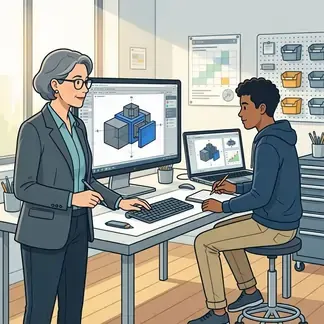
Understanding the Assignment Structure in BMEN.4390 – Computer Aided Engineering Design & Analysis
Assignments in this course are usually designed to evaluate how effectively students can transform engineering concepts into computer-aided models and analytical outputs. Most coursework combines modelling accuracy, engineering logic, and simulation-based evaluation rather than focusing only on visual design.
CAD Modelling Assignments Focus on Parametric Accuracy
A major portion of BMEN.4390 assignments revolves around creating fully defined parametric models using CAD platforms such as SolidWorks. Students are generally expected to construct engineering components, biomedical parts, assemblies, and technical layouts while maintaining dimensional consistency and manufacturable geometry.
Assignments often include:
- Sketch-based feature generation
- Extrude and revolve operations
- Surface modelling
- Assembly constraints
- Motion relationships
- Design tables
- Parametric modifications
- Technical drawing generation
The challenge for many students is that instructors usually evaluate not only the final geometry but also the modelling methodology. Poor feature sequencing, unstable sketch relationships, or incomplete constraints can reduce assignment grades significantly.
In many BMEN.4390 projects, students are required to create models that can later be used for engineering analysis. This means improperly structured geometry creates issues during meshing, simulation setup, and load application.
Typical modelling mistakes include:
- Underdefined sketches
- Over-constrained assemblies
- Broken feature trees
- Incorrect dimensions
- Weak parent-child feature relationships
- Non-manufacturable geometry
Students working on biomedical engineering designs often encounter additional complexity because components may include ergonomic surfaces, organic geometry, or anatomical structures that are harder to model using standard CAD workflows.
Strong assignment submissions usually demonstrate:
- Fully constrained sketches
- Clean feature organization
- Correct use of reference geometry
- Efficient modelling strategies
- Proper tolerance consideration
- Accurate technical drawings
The course itself emphasizes engineering design visualization and computer simulation through interactive software applications.
Finite Element Analysis Assignments Require Proper Simulation Setup
Finite Element Analysis (FEA) assignments are among the most technically demanding tasks in BMEN.4390 coursework. These assignments require students to evaluate how engineering components behave under loading conditions using simulation environments integrated into CAD software.
Students are commonly asked to analyze:
- Stress distribution
- Deformation behaviour
- Thermal response
- Factor of safety
- Strain concentration
- Dynamic loading
- Structural integrity
- Contact interactions
Many students incorrectly assume that simulation software automatically generates accurate results. In reality, assignment quality depends heavily on engineering judgement and correct simulation setup.
Common FEA assignment requirements include:
- Material property assignment
- Boundary condition application
- Mesh refinement
- Solver selection
- Load interpretation
- Convergence validation
- Result interpretation
- Engineering recommendations
A poorly meshed model or incorrect constraint setup can completely invalidate the analysis. Students often lose marks because they apply unrealistic supports or fail to justify engineering assumptions.
Assignments involving biomedical components become even more complex because biological materials often behave differently from standard engineering materials. Students may need to simulate flexible structures, implant components, or medical device interactions under variable loading conditions.
Course material related to computer-aided engineering commonly includes structural and thermal analysis workflows involving finite element modelling and simulation interpretation.
Successful simulation assignments generally include:
- Properly refined mesh regions
- Realistic loading conditions
- Logical engineering assumptions
- Clear stress interpretation
- Professional result visualization
- Technical discussion of findings
Engineering Drawing and Documentation Assignments Demand Precision
Another critical component of BMEN.4390 coursework involves technical documentation and engineering communication. Students are frequently required to generate manufacturing-ready engineering drawings alongside CAD models and simulation outputs.
Assignments may involve:
- Orthographic projections
- Section views
- Exploded assemblies
- GD & T application
- Dimensional annotations
- Tolerance specifications
- Bill of materials
- Design documentation
Engineering drawing assignments are rarely simple drafting exercises. Instructors typically assess whether students understand industrial engineering communication standards.
Students commonly struggle with:
- Improper dimension placement
- Missing tolerances
- Incorrect projection methods
- Poor annotation structure
- Incomplete assembly documentation
- Non-standard formatting
Assignments involving biomedical products often require additional documentation complexity because components may interact with human anatomy or medical systems.
Technical documentation quality becomes especially important in design-analysis courses because the engineering report must explain how the model, simulation, and final design decisions are connected.
Strong submissions usually demonstrate:
- Industry-standard drawing practices
- Clear annotation hierarchy
- Correct geometric tolerancing
- Organized layouts
- Readable manufacturing documentation
- Integration between CAD and analysis results
Major Challenges Students Face in BMEN.4390 Assignments
Students frequently underestimate the technical depth of Computer Aided Engineering Design & Analysis coursework. While CAD software appears visually intuitive, engineering assignments require analytical understanding far beyond basic modelling.
Managing Large Multi-Part Assemblies and Simulation Dependencies
One of the most difficult aspects of BMEN.4390 assignments is handling complex assemblies containing multiple interconnected components. Students often build assemblies successfully but encounter errors during motion studies or finite element analysis.
Typical assembly assignment issues include:
- Broken mates
- Interference problems
- Incorrect motion constraints
- Unstable references
- Excessive rebuild errors
- Simulation incompatibility
Assignments become increasingly difficult when students must simulate assemblies under operational conditions. Small geometric inconsistencies can create failed meshes or unrealistic stress results.
Biomedical engineering assemblies may include:
- Prosthetic joints
- Instrument mechanisms
- Surgical devices
- Sensor housings
- Fluid interaction systems
These projects require students to think simultaneously about:
- Mechanical function
- User interaction
- Material behaviour
- Assembly feasibility
- Manufacturing practicality
Students often spend excessive time troubleshooting software errors rather than improving engineering quality because large assemblies demand disciplined modelling workflows from the beginning.
Interpreting Engineering Analysis Results Correctly
Many students can generate simulation plots but struggle to interpret engineering meaning from the results. BMEN.4390 assignments often require detailed engineering justification rather than screenshots alone.
Students are typically expected to explain:
- Why stress concentrations occur
- How loading affects deformation
- Whether designs are structurally safe
- Which design modifications improve performance
- How materials influence behaviour
- Why simulation assumptions matter
A common problem occurs when students blindly trust simulation outputs without verifying whether the results are physically realistic.
For example, extremely high stress values may appear because of:
- Singularities
- Sharp edges
- Improper constraints
- Poor mesh quality
- Unrealistic loads
Assignments involving biomedical engineering applications require additional interpretation because medical devices often involve safety-critical considerations.
The course structure focuses heavily on integrating design visualization with engineering simulation and analytical reasoning.
Students who provide strong engineering interpretation generally perform better than students who only generate attractive graphical outputs.
Effective Strategies for Completing BMEN.4390 Design and Analysis Assignments
The most successful students in Computer Aided Engineering Design & Analysis courses usually follow structured engineering workflows rather than attempting assignments through trial and error.
Build CAD Models Specifically for Simulation Compatibility
Students frequently create geometrically correct models that perform poorly during analysis because the geometry was not optimized for simulation environments.
Efficient assignment workflows usually involve:
- Creating simplified but accurate geometry
- Avoiding unnecessary features
- Organizing reference planes properly
- Maintaining parametric relationships
- Reducing rebuild complexity
- Preparing clean assemblies for meshing
Simulation-friendly modelling is especially important for assignments involving finite element analysis because highly complex geometry dramatically increases computational problems.
Students should also avoid:
- Tiny fillets
- Unnecessary cosmetic features
- Excessive surface fragmentation
- Complex imported geometry
Assignments involving biomedical components benefit greatly from simplified engineering models that maintain functional accuracy while improving solver stability.
Modern computer-aided engineering workflows consistently emphasize integration between CAD generation and downstream engineering analysis.
Focus on Engineering Logic Instead of Software Automation
One of the biggest misconceptions in BMEN.4390 coursework is that engineering software performs the engineering automatically. High-scoring assignments usually demonstrate strong analytical reasoning rather than simple software operation.
Students should justify:
- Material selection
- Load assumptions
- Mesh density
- Constraint placement
- Safety considerations
- Design optimization decisions
Engineering instructors often value problem-solving methodology more than visual complexity.
For example, a simple biomedical component with well-validated stress analysis may receive better marks than a visually advanced model with poor engineering reasoning.
Assignments become stronger when students explain:
- Why a simulation approach was selected
- What assumptions were necessary
- How limitations affect results
- Which improvements could optimize the design
This analytical depth separates engineering coursework from purely software-based drafting exercises.
Improve Engineering Reports and Technical Presentation Quality
BMEN.4390 assignments often include substantial technical reporting requirements. Students must usually present CAD development, engineering calculations, simulation findings, and design conclusions in structured documentation formats.
Weak reports often contain:
- Excessive screenshots
- Minimal engineering discussion
- Poor figure organization
- Incomplete methodology explanation
- Unsupported conclusions
High-quality engineering reports typically include:
- Clear design objectives
- Structured methodology
- Simulation setup explanation
- Engineering assumptions
- Result interpretation
- Technical recommendations
Biomedical engineering assignments may additionally require discussion of:
- Biocompatibility
- User safety
- Ergonomic interaction
- Medical application constraints
- Regulatory considerations
Professional presentation quality becomes especially important because engineering design communication is a major learning objective in computer-aided engineering coursework.
BMEN.4390 Assignment Help for CAD Modelling, FEA, and Engineering Analysis
Students working on BMEN.4390 – Computer Aided Engineering Design & Analysis assignments often seek academic support because the coursework combines advanced CAD modelling, engineering simulation, design validation, and technical reporting within tight submission deadlines.
Assignment difficulties commonly involve:
- SolidWorks modelling errors
- FEA setup problems
- Mesh convergence issues
- Assembly instability
- Motion simulation failures
- Technical drawing inaccuracies
- Engineering report structuring
- Stress analysis interpretation
At SolidWorks Assignment Help, students can receive assistance for coursework involving:
- Parametric CAD modelling
- Biomedical component design
- Engineering simulation
- Structural analysis
- Technical drawing preparation
- Assembly modelling
- Design optimization
- Engineering documentation
Since BMEN.4390 assignments are heavily project-oriented, students benefit from guidance that focuses on both software execution and engineering reasoning. The course specifically emphasizes design, visualization, and computer simulation using engineering software applications.
Support with engineering assignments can help students improve:
- CAD workflow efficiency
- Simulation accuracy
- Technical documentation quality
- Design validation methodology
- Assignment presentation standards
- Overall engineering understanding
Because computer-aided engineering courses are directly connected to modern engineering industry practices, strong assignment performance in BMEN.4390 can significantly strengthen technical portfolios for careers involving product development, biomedical device engineering, mechanical analysis, CAD design, and engineering simulation.